The gap between academic fascination and professional reality
I have identified several key hurdles students face when they feel like neurosurgery is for them. Even before we talk about how to get into neurosurgery, the zeroth one should be the gap between academic fascination and professional reality. This is a common and significant fundamental barrier.
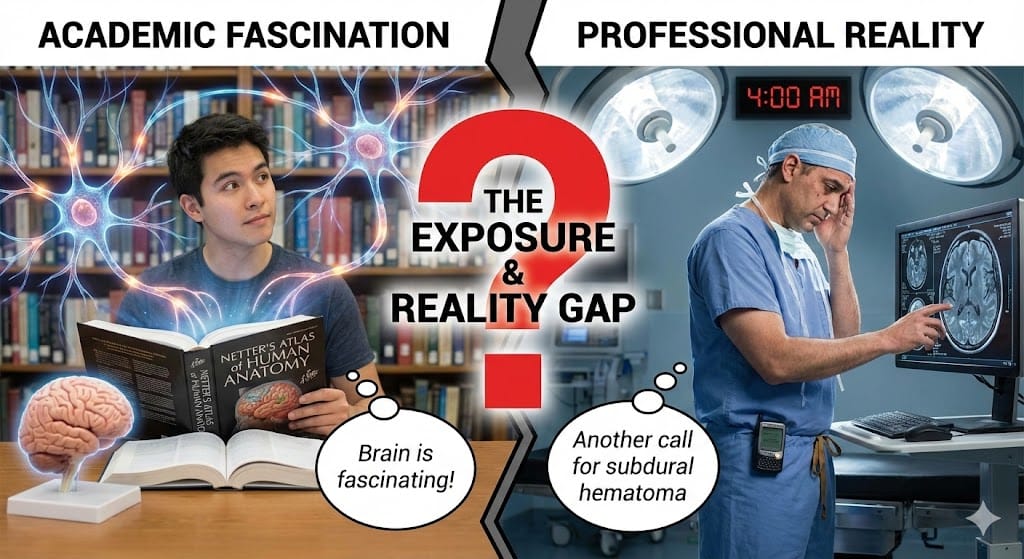
I have identified several key hurdles students face when they feel like neurosurgery is for them. Even before we talk about how to get into neurosurgery, the zeroth one should be the gap between academic fascination and professional reality. This is a common and significant fundamental barrier that prevents students from successfully entering the field of neurosurgery.
The Exposure & Reality Gap
- Mistaking Fascination for Vocation: This is the symptom of the gap. When the student's only exposure to neurosurgery is reading Netter's Neuroanatomy or watching highly edited documentaries, their interest is purely academic. They are fascinated by the subject (the brain) but have not been exposed to the job (the 4am call for a subdural hematoma). Even more so, neuroanatomy is the most accessible subject for medical students as it taught early on but it does not mean that you like neurosurgery more. Both are pretty much separate. Yes, neurosurgeons do use neuroanatomy for thier profession but so do Neurologists, Neuroscientits, Psychiatrists, Neuroradiologists, Neuropsychologists, Physical Therapists, Occupational Therapists, Speed-Language Pathologists, and even Bio-engineering Professionals.
- Being unaware of the Day-to-Day Reality: This is the result of the first problem. Students have no idea what the job is really like because they can't get enough real-world experience. Students might be unaware of the physical stamina required, the emotional toll, the unpredictable hours, or the split-second and high stakes decision-making.
- Lack of Real Hospital Experience: This is the root of the problem. Neurosurgery is a relatively small and specialized field. Unlike internal medicine and general surgery, many hospitals don't have a dedicated neurosurgery department. Students simply don't have access to the environment.
The Mentorship and Guidance Gap
- Lack of a "Reality Check": This is where mentorship comes in or external validation comes in. A student needs someone to validate their interest and brutally honest with them. A neurosurgeon describing their daily life is often a good filter to screen out students who were just interested academically
- The Hidden Curriculum: Students don't know what they don't know. They are unaware of the unwritten rules for a successful neurosurgery application. Research is not optional. Networking with other neurosurgery aspirants, neurosurgery residents, attendings and program directors is key to a successful application. Having real-life experience in neurosurgery is often the key factor that makes or breaks your application.
If all of these hurdles make you feel that neurosurgery might not be for you, think again. Neurosurgery is one of the most competitive specialties to match into, no doubt, but even after the fear of not matching, or the pressure to have exceptional medical school grades and national exam scores you are still reading this; this means that you have already self-selected yourself out of everyone who quit mid way.
Each of the posts in this series will focus on helping you with specific problems that students face. Without further ado, lets get started.
